#20 Storytelling for stylized portrait: my 5 rules.
NOVEMBER CHALLENGE 🖤
Bonjour my little demon, ready to collect gem #20?
Whether you just joined or have been here from the beginning, thank you so much for reading.
TODAY’S GEM
I’m not a technical artist. Yes, I’m good at portraits (it’s my job, after all). But hyper-detailed shading, flawless realism, or mind-blowing technical tricks? That’s just not my thing.
For me, it’s about one thing: the story.
The storytelling.
The energy.
Every choice I make—every line, every shadow—is focused on telling the story I want to share.
That’s why I often keep things simple, hinting at details rather than drawing every single one. If it doesn’t serve the story, it’s not worth adding.
This approach is how I stand out.
Here are five principles I follow to bring storytelling into my portraits:
1. Every Portrait Needs a Story
I always create a story, even for quick studies. Having a narrative helps me set a clear intention and guides my artistic choices as I bring the portrait to life. To build a story, I ask myself:
- When? (Is this set in the past, present, or future?)
- Who? (A demon girl? A flower fairy? A fire spirit?)
- How? (What challenge is this character facing?)
2. Show the Story Through Small Details
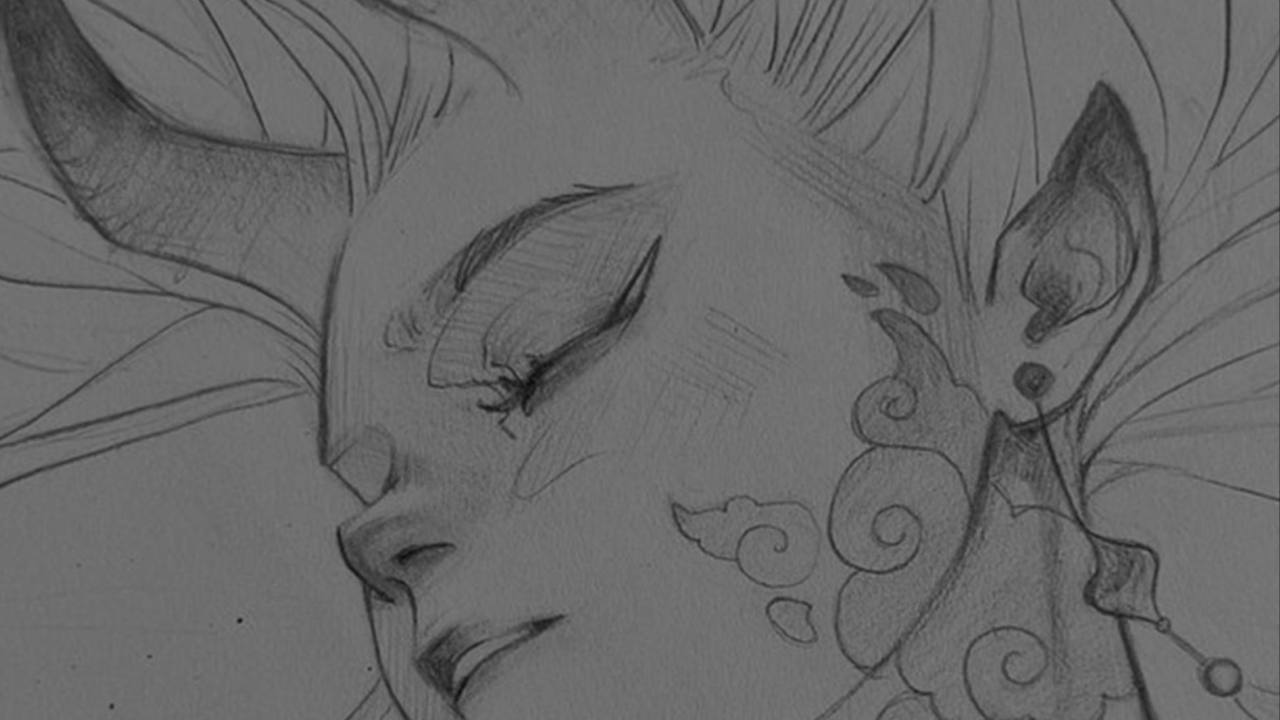
Expression, accessories, hairstyle—they all matter. Every element in the portrait should add something to the story. If it doesn’t, I leave it out.
3. Use Shapes to Add Meaning
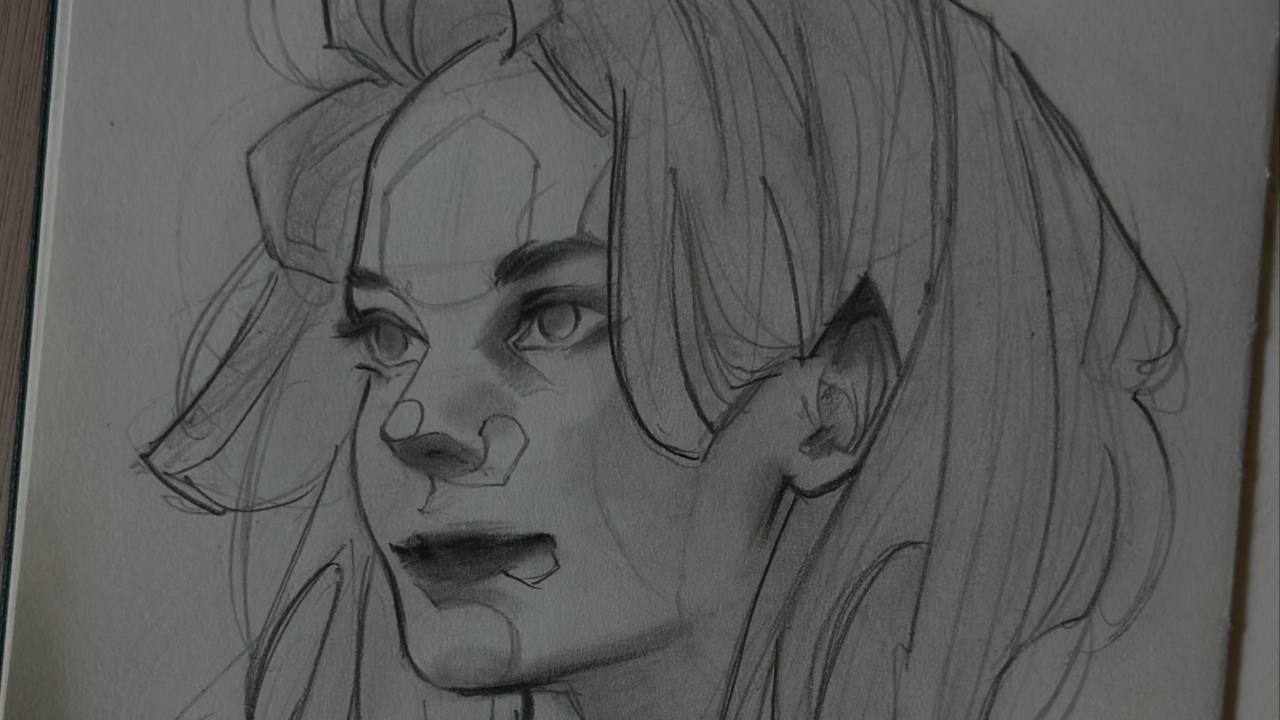
Shapes have power. You’ll see a lot of spheres in my drawings—they hint at harmony and a connection to nature. On the other hand, you’ll also spot plenty of triangles or sharp edges, which hint at danger or instability. Shapes, lines, shadows, and light all carry meaning. Before adding intricate details, focus on these basics to tell your story.
4. Let Blank Spaces Speak
Leaving some areas empty while adding lots of detail to others adds meaning to your portrait. It helps direct the viewer’s eye, letting you take control of the story you’re telling.
5. Lines Have Personality
Soft, flowing, immaculate lines work well for gentle, harmonious characters. On the other hand, I love using bold, energetic lines to make my characters look more fierce and badass.
✨ Bonus:
This isn’t a rule, but here’s a piece of advice I always share with my Reality to Fantasy students to help them level up their stylized portraits:
Create a paradox.
That’s what I’ll be diving into in the next Portrait Gem.
Bisous,
Léa
Responses