Portrait Gem #32
NOVEMBER CHALLENGE 🖤
Bonjour my little demon, ready to collect another game-changing portrait lesson?
We are 18,947 😈 in the Portrait Gem Hunt! Whether you just joined or have been here from the beginning, thank you so much for reading.
TODAY'S GEM
Accuracy can feel like a mystery, but it’s really about simple habits and techniques. Here are 5 tips that have completely changed the way I approach proportions and likeness in portraits:
1. Start with Light Lines
Sketch lightly at first to keep things flexible. Light lines let you adjust your proportions as you go, and they’re easy to erase. Think of them as a roadmap rather than a commitment—they provide context without locking you in too soon.
2. Be Patient
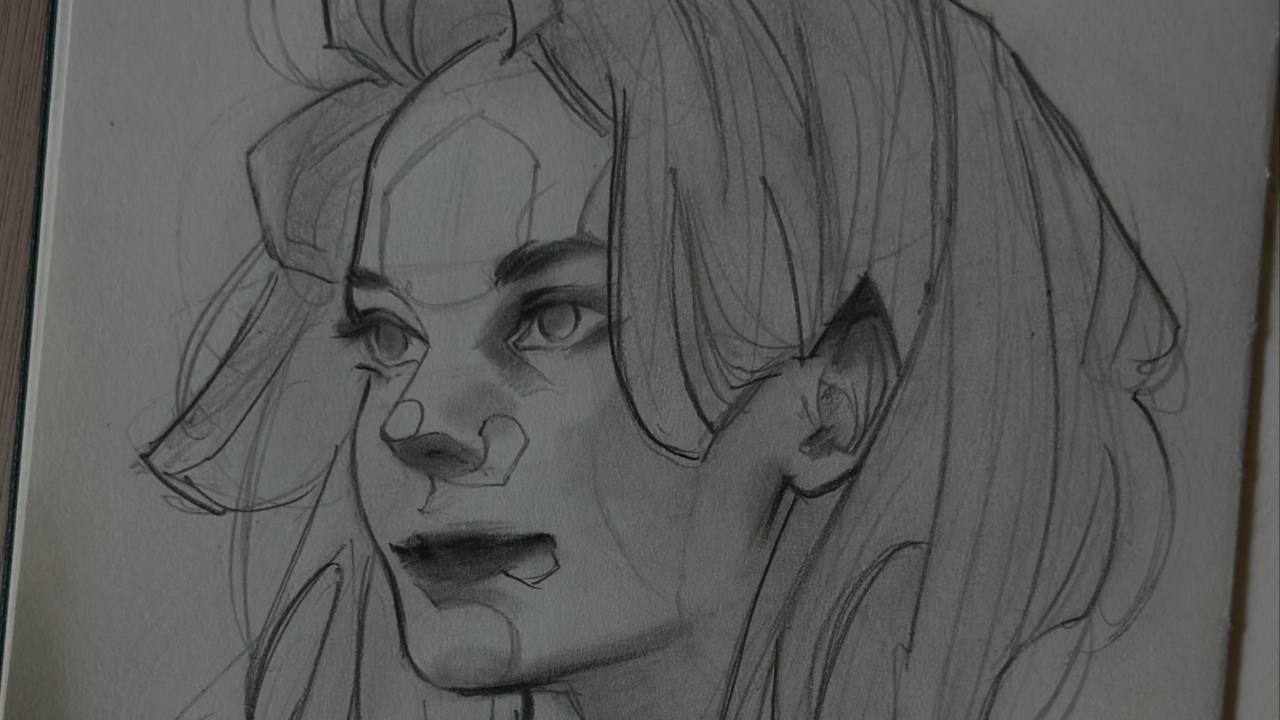
Don’t dive into the details too early. Start with big shapes and masses: the overall head shape, the placement of the features, and the general proportions. Refine these step by step before adding any details.
💡Pro tip : Squint at your reference to blur out unnecessary details and focus on the overall structure. This will help you stay on track and avoid overcomplicating too soon.
3. Simplify!
It may seem counterintuitive, but simplifying the head into basic shapes—like ovals, rectangles, or even a box—makes it much easier to nail proportions. Details can easily distract and flatten your portrait, but by simplifying, you’ll stay focused on the relationships between the features.
4. Measure Twice, Draw Once
Keep comparing relationships between features as you draw. How wide is the nose compared to the eyes? How far is the mouth from the chin? Try using “unit measuring”: take the size of one feature (e.g., the width of an eye) and compare it to others. For example:
- How many “eye widths” fit across the entire face?
- Is the space between the eyes the same as the width of one eye?
These little checks will help you stay accurate.
5. Trust Your Eyes
Rely on observation instead of what you think you know about a face. If something feels off, pause, step back, and compare your drawing to the reference. Even for stylized portraits, references are crucial for maintaining believability.
💡Pro tip: Flipping your canvas or drawing horizontally is a great way to spot errors. Your eyes will instantly catch asymmetry or misaligned features.
Voilà, that’s all for today. What topic should I cover tomorrow?
See you tomorrow!
Bisou,
Léa
Responses